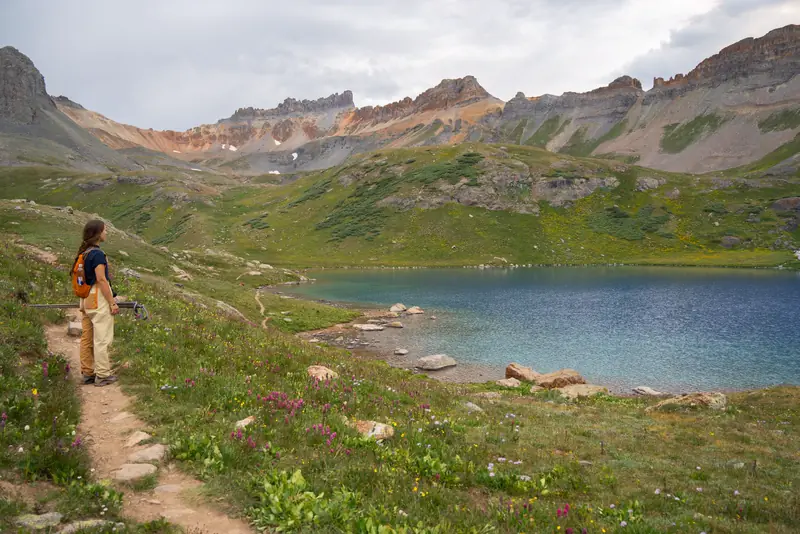
Five days, 71 miles and about 12,900 feet of climbing. I packed everything into the Ridgeline 38 the night before and weighed it on the bathroom scale: 29.6 pounds with food and two liters of water.
The rule for this trip was simple. If it did not fit in the pack with the lid at its normal height, it stayed home. The only exception was food: I raised the lid on day one to carry all five days of it.
What fit inside
- Basecamp 2P TentMain bag, poles in the side pocket
- Alpenglow 20° BagBottom of the pack, no stuff sack
- Stormline ShellFront stretch pocket, every day
- Stove, pot, fuelTop of the main bag
- Food for 5 daysBear-proof bag, middle of the pack and under the lid
- Night Owl 400Hip belt pocket, with snacks
Thirty pounds on day one. My shoulders never complained.
The miles, day by day
| Day | Route | Miles | Climb (ft, GPS) |
|---|---|---|---|
| 1 | Waterton Canyon to the South Platte River | 16.8 | 3,100 ft |
| 2 | South Platte to Little Scraggy | 11.5 | 2,300 ft |
| 3 | Little Scraggy to Rolling Creek | 12.2 | 2,100 ft |
| 4 | Rolling Creek to Long Gulch | 16.1 | 2,800 ft |
| 5 | Long Gulch to Kenosha Pass | 14.6 | 2,600 ft |
What I would change
The hip belt pockets fit my phone and two bars, but not a phone in a rugged case. We have moved the zipper half an inch on next season's pack so a cased phone slides in. That change came straight from this trip.
The vent frame did its job. On the climb out of the South Platte, the hottest afternoon of the week, my back was damp but never soaked. Every other pack I have used fails that test.
If I did this again, I would carry the Talus poles. Day four ends with a long descent into Long Gulch, and my knees noticed.